


A large New York office building reflects shifting demand in commercial real estate and the need for smart repositioning strategies
Office space is sitting empty. And commercial property managers are starting to feel it.
Tenants want something different now. The old setup just isn't cutting it anymore, and business owners are looking deeper into the spaces their niches require. So what happens to all that unused space?
Smart managers aren't waiting to find out. They're repositioning, rethinking what their buildings are actually for. This isn't some trend coming down the pipeline. It's already happening in the capital real-estate havens in cities across the US and Canada, specifically. Right now. In markets everywhere.
The question is, are you & your team ahead of it or catching up?

Why choose office repositioning?
Office repositioning is skyrocketing because traditional office demand is no longer the safest or easiest option. Hybrid work, cost-cutting, and changing workplace habits are impacting long-term lease commitments and usually not in the most positive way!
Recent market data shows global office vacancy rates in major cities sitting between 12%–20% in 2025, with some CBDs even higher (CBRE, JLL reports). At the same time, residential demand and mixed-use development are increasing in urban areas.
For property managers, this creates a clear challenge:
Empty space = lost revenue
Holding costs remain the same
Owners expect performance improvement
How property inspection software helps speed up property management:
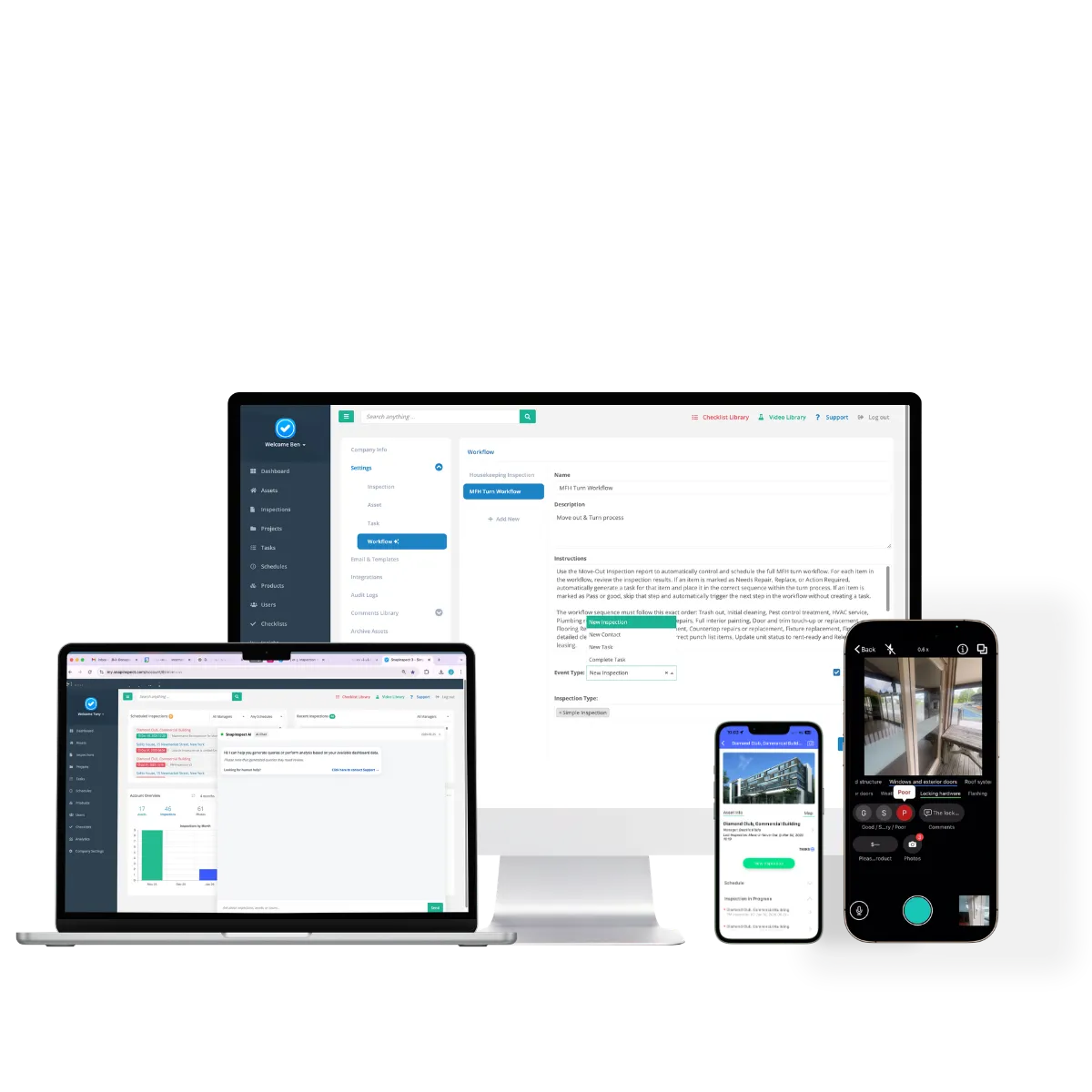
Property inspection software, like SnapInspect, helps property managers save their time and speed up work by providing these teams with a centralized app and platform that they can access at any time from their phones and digitalize the entire property process. Like finding issues with properties and then instantly connecting the next steps to get maintenance teams or vendors in to fix the building issues. This = clarity and consistency.
Instead of chasing information, everything is captured in one place.
What office repositioning actually means
Office repositioning means adapting an existing commercial property to better match current market demand.
This can include:
Converting office to residential units
Creating mixed-use spaces (retail + residential + office)
Switching top flexible workspace or co-working
Reorganizing layouts for smaller, hybrid-friendly tenants
The goal is simple: make the asset usable again
Office Property Tips To Reduce Vacancy and Boost ROI
The operational side of repositioning is where things get difficult.Property managers need to handle:
Ongoing inspections during construction or upgrades
Compliance checks across different use types
Contractor coordination
Asset condition tracking
Tenant readiness and handovers
This is where time gets lost and costs increase.
Because missed details always end up in delays and you know what delays lead to? Exactly. Massive loss of income and disrupted bottom lines
Why inspections become critical during repositioning
Inspections are not just routine during repositioning. They are risk control.
You need clear visibility across:
Pre-conversion building condition
Progress tracking during works
Compliance with safety and building codes
Final handover quality
Here’s a simple breakdown on HOW Inspection Software & Digital Tools actually work for property management:
Challenge | Without software | With inspection software |
Tracking site progress | Manual updates, inconsistent | Real-time updates with photos + reports |
Compliance checks | Easy to miss details | Standardised checklists |
Team coordination | Back-and-forth emails | Centralised communication |
Documentation | Scattered files | Automated, organised records |
Time spent reporting | Hours per report | Minutes per report |
The real takeaway for property managers
Office repositioning is no longer optional in many commercial real estate markets. It is a response to shifting demand.
The difference between a successful repositioning project and a costly one often comes down to execution.
Clear processes matter. Accurate data matters. Speed matters.
And most importantly — visibility across the entire asset lifecycle matters.
That is where the right systems quietly make a big difference.